RTX 40 Series complete guide: Everything about NVIDIA’s latest GPU lineup
Explore the comprehensive guide to NVIDIA’s RTX 40 Series GPUs, featuring technical specifications and performance capabilities
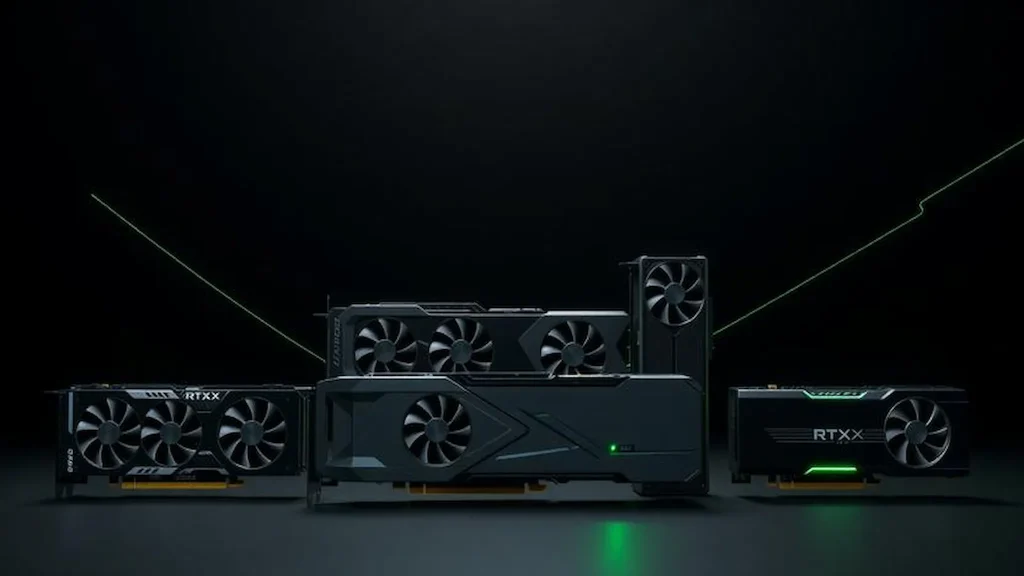
The NVIDIA RTX 40 Series represents a significant leap forward in graphics processing technology, introducing the revolutionary Ada Lovelace architecture. This new generation of GPUs delivers unprecedented performance, efficiency, and features that redefine what’s possible in gaming, content creation, and professional applications.
In this comprehensive guide, we’ll explore the entire RTX 40 Series lineup, from the flagship RTX 4090 to the more accessible options, examining their technical specifications, key technologies, and performance capabilities. Whether you’re a content creator, or professional, understanding these GPUs will help you make informed decisions about your next upgrade.
Flagship GPUs
The flagship models in the RTX 40 Series offer unparalleled performance for the most demanding applications. These GPUs represent the pinnacle of consumer graphics technology, featuring the full implementation of the Ada Lovelace architecture.
GeForce RTX 4090
The most powerful consumer GPU ever created
- 16,384 CUDA cores with 2.52 GHz boost clock
- 24GB GDDR6X memory with 1,008 GB/s bandwidth
- Fourth-generation Tensor Cores with DLSS 3
- Third-generation RT Cores for advanced ray tracing
- Ada Lovelace architecture with 76.3 billion transistors
- 450W TDP with 16-pin power connector
Technical specifications
GeForce RTX 4080
High-end performance with excellent efficiency
- 9,728 CUDA cores with 2.51 GHz boost clock
- 16GB GDDR6X memory with 716.8 GB/s bandwidth
- Fourth-generation Tensor Cores with DLSS 3
- Third-generation RT Cores for advanced ray tracing
- Ada Lovelace architecture with 45.9 billion transistors
- 320W TDP with 16-pin power connector
Technical specifications
Upper mid-range GPUs
The upper mid-range models in the RTX 40 Series offer an excellent balance of performance and efficiency, making them ideal for high-refresh-rate 1440p gaming and even 4K gaming with appropriate settings.
GeForce RTX 4070 Ti
Exceptional 1440p performance with ray tracing
- 7,680 CUDA cores with 2.61 GHz boost clock
- 12GB GDDR6X memory with 504.2 GB/s bandwidth
- Fourth-generation Tensor Cores with DLSS 3
- Third-generation RT Cores for advanced ray tracing
- Ada Lovelace architecture with 35.8 billion transistors
- 285W TDP with 16-pin power connector
Technical specifications
GeForce RTX 4070
Efficient performance for 1440p gaming
- 5,888 CUDA cores with 2.48 GHz boost clock
- 12GB GDDR6X memory with 504.2 GB/s bandwidth
- Fourth-generation Tensor Cores with DLSS 3
- Third-generation RT Cores for advanced ray tracing
- Ada Lovelace architecture with 29.5 billion transistors
- 200W TDP with 16-pin power connector
Technical specifications
Entry-level GPUs
The entry-level models in the RTX 40 Series bring the benefits of the Ada Lovelace architecture to more accessible price points, offering excellent 1080p performance and even 1440p gaming with the right settings.
GeForce RTX 4060 Ti
Efficient 1080p to 1440p gaming
- 4,352 CUDA cores with 2.54 GHz boost clock
- 8GB GDDR6 memory with 288 GB/s bandwidth
- Fourth-generation Tensor Cores with DLSS 3
- Third-generation RT Cores for advanced ray tracing
- Ada Lovelace architecture with 22.2 billion transistors
- 160W TDP with 12-pin power connector
Technical specifications
GeForce RTX 4060
1080p gaming with DLSS 3
- 3,072 CUDA cores with 2.46 GHz boost clock
- 8GB GDDR6 memory with 272 GB/s bandwidth
- Fourth-generation Tensor Cores with DLSS 3
- Third-generation RT Cores for advanced ray tracing
- Ada Lovelace architecture with 18.9 billion transistors
- 115W TDP with 12-pin power connector
Technical specifications
Technical comparison
| GPU | CUDA cores | Boost clock | Memory | Memory bandwidth | TDP |
|---|---|---|---|---|---|
| RTX 4090 | 16,384 | 2.52 GHz | 24GB GDDR6X | 1,008 GB/s | 450W |
| RTX 4080 | 9,728 | 2.51 GHz | 16GB GDDR6X | 716.8 GB/s | 320W |
| RTX 4070 Ti | 7,680 | 2.61 GHz | 12GB GDDR6X | 504.2 GB/s | 285W |
| RTX 4070 | 5,888 | 2.48 GHz | 12GB GDDR6X | 504.2 GB/s | 200W |
| RTX 4060 Ti | 4,352 | 2.54 GHz | 8GB GDDR6 | 288 GB/s | 160W |
| RTX 4060 | 3,072 | 2.46 GHz | 8GB GDDR6 | 272 GB/s | 115W |
Key technologies in the RTX 40 Series
- Ada Lovelace architecture: The foundation of the RTX 40 Series, featuring optimized streaming multiprocessors, improved ray tracing performance, and enhanced power efficiency compared to previous generations.
- DLSS 3 (Deep Learning Super Sampling 3): A revolutionary AI-powered technology that uses the fourth-generation Tensor Cores to generate additional high-quality frames, dramatically improving performance while maintaining image quality.
- Fourth-generation Tensor Cores: Deliver up to 4x performance compared to previous generations, enabling advanced AI features like DLSS 3, AI-accelerated denoising, and enhanced content creation workflows.
- Third-generation RT Cores: Provide up to 2x ray tracing performance compared to previous generations, enabling more realistic lighting, shadows, and reflections in real-time applications.
- AV1 encoding: Hardware-accelerated AV1 encoding for more efficient streaming and recording, offering better quality at lower bitrates compared to previous codecs.
- Shader Execution Reordering (SER): A new technology that improves shader efficiency by reordering shader execution in real-time, resulting in better performance in complex workloads.
Final thoughts
The RTX 40 Series represents a significant advancement in graphics technology, with each GPU in the lineup offering a compelling combination of performance, features, and efficiency. Whether you’re a content creator needing fast rendering times, or a professional working with complex visualizations, there’s an RTX 40 Series GPU that meets your needs.
The introduction of DLSS 3 and the continued advancement of ray tracing technology make this generation particularly exciting, as these technologies are becoming increasingly supported in professional applications. As software continues to evolve to take advantage of these new capabilities, the RTX 40 Series GPUs will only become more valuable over time.